


Safe Grip in Every Situation
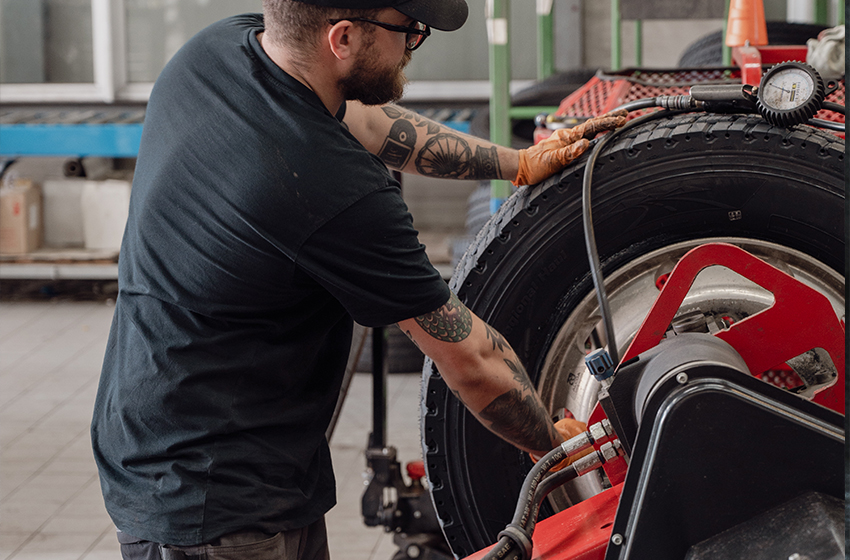
Tires are the only contact between your vehicle and the road – making them crucial for safety, braking distance, comfort, and efficiency. The right tires ensure optimal traction, even wear, and fewer breakdowns. Whether passenger cars, motorcycles, light commercial vehicles, trucks, tractors, or earthmovers – we find the right tire for your vehicle and application.Our Tire Sales Service Includes:
- Premium brand tires for summer, winter, and all-season use
- Consultation based on usage profile (road, construction site, agriculture, commercial use)
- Verification of size, load index, and speed rating
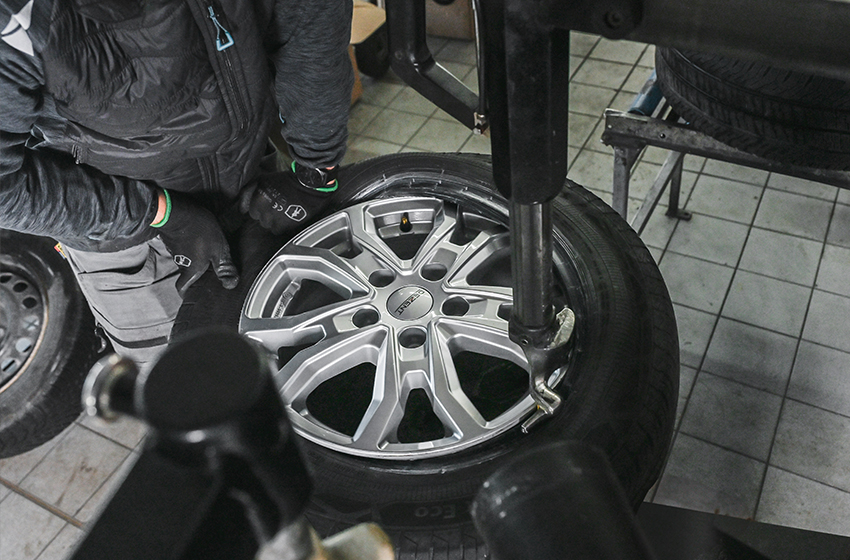
- Installation and valve/seal check upon request
- Proper disposal of old tires according to regulations
Tire sales
Incorrect tires increase wear, extend braking distances, and incur unnecessary costs. We guarantee the best solution for your vehicle.- Increased safety in wet, snowy, and hot conditions
- Shorter braking distances and better stability
- Reduced fuel consumption thanks to correct rolling resistance
- Even tire wear and longer lifespan
- Protection of rims and suspension components
When Should Tires Be Checked or Replaced?
We generally recommend an inspection:- At every seasonal change (summer/winter)
- In case of uneven wear or vibrations
- After hitting curbs or potholes
- In case of pressure loss or warning messages
Short waiting times
we work efficiently
Professional workmanship
according to manufacturer specifications
Frequently Asked Questions
An extended warranty is actually an insurance policy on your vehicle, a safeguard against expensive, unforeseen repairs. It covers repairs for an agreed-upon period of time and miles. True warranties, though, are included in the price of the product.
Transmission fluid should be exchanged every 60,000 miles. By following your vehicle's manufacturer recommendations on transmission fluid exchanges, you are truly protecting your vehicle from preventable (and expensive) transmission damage.
If your vehicle uses conventional oil, you should have it replaced every 3 months or 3,000 miles.
If your vehicle uses synthetic oil, you should have it replaced every 6 months or 5,000 miles.
Car batteries ideally last between 3-5 years depending on a number of factors.
To ensure optimal performance and maintenance, simply have your battery checked by an technician during every oil change.
Certified automotive technicians are held to measurable and strict standards in their line of work, and they are accountable to those standards individually.
Autolane is dedicated to upholding those standards.
Technical Information
The markings on the tire sidewall indicate the tire size, maximum speed, load capacity, and manufacturing date.
All this information is visible on the sidewall of the car tire. The format of these markings is regulated by the United Nations Economic Commission for Europe.
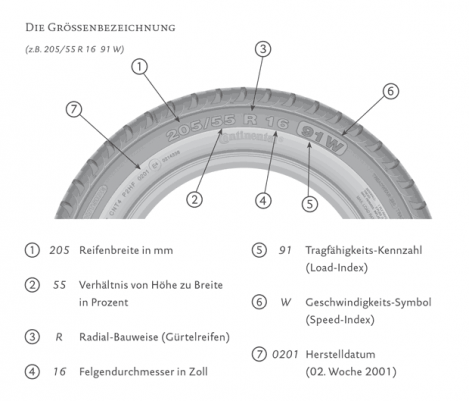




Tire designation/marking
A car tire is defined by the following specifications:
- Tire width
- Aspect ratio between the sidewall height and the (nominal) tire width (not the tread width) in percentage
- Casing construction (biased or radial)
- Rim diameter in inches
- Load index
- Speed index
- Additional markings
The abbreviation 185/65 R 15 85 H has the following meaning:
- 185 indicates: the tire’s tread width is 185 mm.
- 65 indicates the aspect ratio (the percentage between the sidewall height and the tire width); in our example, the sidewall height is 120 mm. If this number is not present, for example in the abbreviation 155 R
- 15 the ratio is 80%.
- R indicates the radial construction of the tire carcass.
- 15 indicates the required rim diameter in inches.
- 85 is the load index, in this example 515 kg.
- H is the speed index (see below) and indicates the maximum permitted speed, in this example 210 km/h.